Researchers identify risk factors of lung disease in AAV patients
Signs of lung damage, shortness of breath linked to higher risk of AAV-ILD

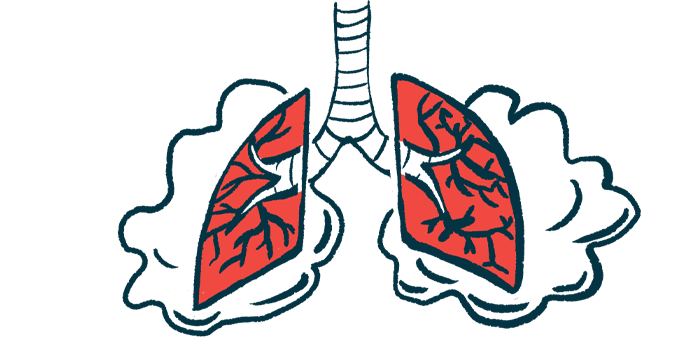




Older age, being male, smoking history, and having self-reactive antibodies targeting the myeloperoxidase (MPO) protein are significantly associated with a higher risk of interstitial lung disease (ILD) in people with ANCA-associated vasculitis (AAV).
That’s according to a review and meta-analysis study, which also showed that certain imaging signs of lung damage, shortness of breath, cough, and high blood levels of lung damage and inflammation markers were also significant risk factors of the lung disease. In contrast, ear, nose, and throat (ENT) involvement and higher disease activity were significantly associated with a lower risk of AAV-related ILD (AAV-ILD).
“These findings may have outstanding public health significance as they offer meaningful insights for conducting valuable interventions, which can guide clinical prevention and management with the target of diminishing the risk of AAV-ILD,” the researchers wrote.
The review study, “The risk factors of anti-neutrophil cytoplasmic antibody-associated vasculitis-associated interstitial lung disease: a systematic review and meta-analysis,” was published in Clinics.

Data pooled from 25 studies on AAV-ILD
AAV comprises a group of conditions characterized by inflammation and damage to small blood vessels. Most cases are caused by ANCAs, self-reactive antibodies that typically bind to one of two proteins: MPO or proteinase 3.
Symptoms vary broadly depending on the impacted tissues, but many patients experience kidney or lung problems. Lung involvement often manifests as ILD, or inflammation and scarring between air sacs in the lungs. This makes it more difficult for the lungs to exchange carbon dioxide and oxygen.
However, “understanding of the factors associated with AAV-ILD remains sparse, particularly regarding the role of sociodemographic, lifestyle, and Clinical factors in disease [development] and progression,” the researchers wrote.
To learn more, a team of researchers in China conducted a systematic review and meta-analysis of published studies up to September 2024 reporting on risk factors of AAV-ILD. A total of 25 studies, covering 1,404 people with AAV-ILD and 2,074 AAV patients without ILD, used as controls, were included.
The studies were published between 2001 and 2024, and were conducted in eight countries in North and South America, Europe, and Asia.
Analyzed risk factors were divided into three categories: sociodemographic factors (age and sex), lifestyle factors (smoking), and clinical factors, including symptoms, disease severity, blood test results, and findings from imaging scans.
Pooled data showed that overall older age, being male, and having a smoking history were significantly associated with an increased risk of AAV-ILD.

More severe AAV associated with lower risk of ILD
Regarding clinical factors, certain patterns of lung damage typical of ILD in high-resolution CT scans (HRCTs), including honeycombing, lattice shadows, and interlobular septal thickening, were linked to a 12 to 60 times higher risk of AAV-ILD.
Shortness of breath was significantly associated with a nearly six times higher risk, while cough was linked to a 60% increased risk. Testing positive for ANCAs targeting MPO was significantly associated with a 39% higher risk.
Other risk factors included a higher estimated sedimentation rate, a marker of body inflammation, and higher levels of KL-6, a marker of lung damage.
“HRCT has become one of the main methods of clinical evaluation of ILD,” the researchers wrote. “Patients with AAV should be alerted to the possibility of combined ILD if they present early with symptoms of pulmonary involvement.”
These findings may have outstanding public health significance as they offer meaningful insights for conducting valuable interventions, which can guide clinical prevention and management with the target of diminishing the risk of AAV-ILD.
In contrast, having ENT involvement and fever were significantly associated with a 66% and 43% lower risk of AAV-ILD, respectively. Higher levels of hemoglobin, the protein that carries oxygen in red blood cells, and a higher Birmingham Vasculitis Activity Score, indicating more severe AAV, were also significantly associated with a lower risk for ILD in AAV patients.
“This study is the first to systematically summarize and elucidate the potential risk factors for the development of ILDs in AAV, addressing a critical gap in the literature and providing a foundation for future research and clinical practice,” the team wrote.
Still, the researchers noted some study limitations, including the small sample sizes and substantial variability between studies.
“While these findings may serve as a reference for further investigation, large-scale [studies following patients over time] or longitudinal research remain necessary for validation,” the team concluded.
About the Author