
Developers partner on infusion therapy for vasculitis with kidney damage
Trial now testing if drug can safely protect kidney function in AAV
Written by |
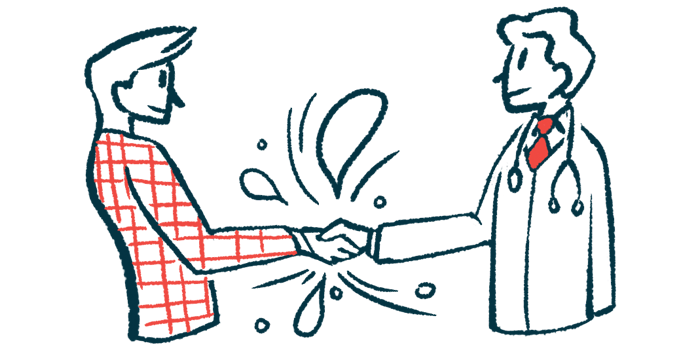
Alentis Therapeutics and CSL are joining forces to develop and commercialize lixudebart, an infusion treatment candidate for people with ANCA-associated vasculitis (AAV) who also have rapidly progressive glomerulonephritis (RPGN), a severe form of kidney damage.
The partnership joins Alentis‘ expertise as lixudebart’s original developer with CSL‘s global development and commercialization capabilities in kidney diseases.
“We are convinced CSL’s demonstrated clinical development and commercialisation capabilities in AAV and kidney diseases [make the company] the right partner to bring lixudebart to patients,” Mark Pruzanski, MD, CEO of Switzerland-based Alentis, said in a joint press release from the new partners.
As part of the collaboration, CSL, which has its worldwide headquarters in Australia, will fund the completion of an ongoing Phase 2 clinical trial of lixudebart, as well as a planned Phase 3 study. The mid-stage RENAL-F02 study (NCT06047171) is still recruiting an estimated 80 adults with AAV-RPGN at 53 sites across Europe. No further details about the expected late-stage trial were disclosed.
The deal initially carries a pricetag of more than $350 million, per the companies. Alentis is in line to receive more than $1 billion in additional payments if the treatment proves successful.

In addition to AAV-RPGN, the companies will also advance lixudebart as a potential treatment for focal segmental glomerulosclerosis and primary sclerosing cholangitis, two rare diseases marked by tissue scarring, or fibrosis.
“This partnership enables us to dramatically accelerate the development of lixudebart in several indications in parallel,” Pruzanski said.
Lixudebart aims to treat severe kidney manifestations of AAV
AAV is a group of autoimmune diseases marked by inflammation of and damage to small blood vessels, usually caused by self-reactive antibodies called ANCAs. The kidneys, which house many small blood vessels, are typically among the organs most affected by the disease.
RPGN is one of the most severe kidney manifestations of AAV. It is marked by inflammation in the kidneys’ filtering units, called glomeruli, which can cause a rapid loss of kidney function. This can be accompanied by fibrosis, potentially resulting in irreversible kidney damage and progression to kidney failure.
“Patients diagnosed with ANCA-associated vasculitis with rapidly progressive glomerulonephritis face rapid kidney function decline, leaving them at risk of irreversible damage even with currently available treatments,” said Bill Mezzanotte, MD, CSL’s executive vice president, head of research & development.
We believe lixudebart has the potential to become an important new therapeutic option to help improve kidney function and prevent progression to [kidney failure in AAV-RPGN].
Lixudebart, formerly known as ALE.F02, is an antibody-based therapy designed to help preserve kidney function by preventing and possibly reversing fibrosis. It specifically targets claudin-1, a protein involved in inflammatory and fibrotic signaling pathways.
“We believe lixudebart has the potential to become an important new therapeutic option to help improve kidney function and prevent progression to [kidney failure],” Mezzanotte said.
In the RENAL-F02 trial, adults with AAV-RPGN are randomly assigned to receive 13 intravenous, or into-the-vein, infusions of either lixudebart or a placebo in addition to standard of care treatment. The trial is testing the therapy at three different doses over six months.
Interim results from the first 26 participants who were followed for as long as six months showed that lixudebart had a good safety profile. It also appeared to be associated with better kidney function, according to the developers.
Treatment also reduced urine levels of CD163, a biomarker associated with AAV-related glomerulonephritis activity, the data showed.
Under the terms of the agreement, Alentis will receive an initial payment of $355 million. The company is eligible to receive additional payments up to $1.2 billion if the treatment achieves certain commercial milestones. If lixudebart reaches the market, global profits from the treatment will be shared, with CSL receiving 55% and Alentis 45%, the partners noted.


Leave a comment
Fill in the required fields to post. Your email address will not be published.