
Low antibody levels common after rituximab for AAV, study shows
Baseline IgG was only independent predictor of HGG
Written by |
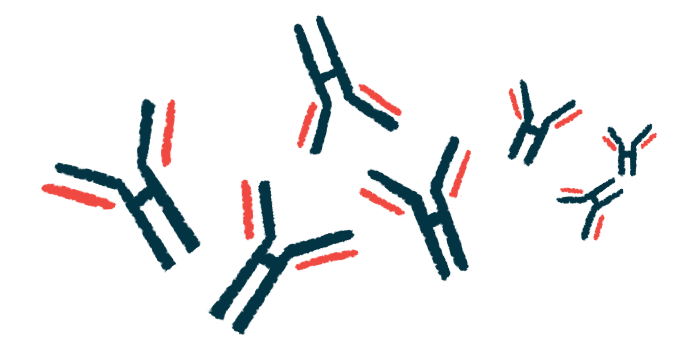
Nearly half of ANCA-associated vasculitis (AAV) patients treated with rituximab developed hypogammaglobulinemia (HGG), or low blood levels of antibodies, according to a population-based Swedish study.
While antibodies normally help fight infections, the occurrence of HGG was not associated with an increased risk of severe infections among rituximab-treated patients in this study.
In fact, a low level of immunoglobulin G (IgG), the most common type of antibody in the blood, before rituximab treatment was the sole independent predictor of subsequent HGG development, “underscoring the importance of close IgG monitoring both before and during RTX [rituximab] therapy,” the researchers wrote.

Study explores HGG risk after rituximab
The study, “Hypogammaglobulinaemia in patients with ANCA-associated vasculitis treated with rituximab,” was published in Frontiers in Medicine.
AAV is a group of rare diseases in which self-targeting antibodies called ANCAs drive inflammatory damage to small blood vessels throughout the body. Most commonly, the disease affects the kidneys, lungs, and upper airways.
Rituximab, sold as Rituxan and others and available as biosimilars, is an infusion therapy approved for people with granulomatosis with polyangiitis (GPA) and microscopic polyangiitis (MPA), the two most common types of AAV.
Used in combination with standard steroid medications called glucocorticoids, rituximab is designed to destroy B-cells, the immune cells responsible for producing antibodies, including ANCAs, to help induce and maintain disease remission.
HGG is a known side effect of rituximab, characterized by abnormally low antibody levels in the blood that can impair the immune system’s ability to fight infections. Studies have shown that AAV patients treated with rituximab are up to four times more likely to develop HGG than people with other autoimmune conditions.
To investigate further, researchers at Lund University in Sweden examined how often HGG develops in AAV patients treated with rituximab, identified predictors of HGG, and explored its association with severe infections.
Nearly half developed low IgG after treatment
The researchers retrospectively analyzed data from 84 AAV patients (51% women) in Southern Sweden who received rituximab as either induction therapy (83%), used to induce remission, or ongoing maintenance therapy (17%), to prevent relapse.
Regarding AAV types, 57 people (67.9%) had GPA, 25 (29.8%) had MPA, and two (2.4%) had eosinophilic granulomatosis with polyangiitis. Most patients (71%) had previously received other immunosuppressive treatments, most commonly cyclophosphamide.
Researchers defined HGG as a total level of immunoglobulin G (IgG), the most abundant type of antibody in human blood, below 6.7 g/L. Mild HGG ranged from 5 to 6.7 g/L of IgG, moderate from 3 to 4.9 g/L, and severe was below 3 g/L.
Data showed that HGG occurred in about half (45%) of the AAV patients who received rituximab over a total follow-up period of 236 person-years (a measure that accounts for the number of patients studied and the time each was followed). This translated to a rate of 16.1 new HGG cases per 100 person-years, roughly equivalent to 16 new cases for every 100 patients followed for one year.
Among patients who developed HGG, most cases were mild (68%), while 26% were moderate and 5% were severe. Among all patients with HGG, the median time from the start of rituximab to HGG onset was 3.5 months, and 60% developed HGG within the first year of rituximab treatment.
“This early onset highlights the vulnerability period following B-cell depletion and underscores the importance of close and systematic follow-up, including routine monitoring of immunoglobulin levels, in all patients receiving RTX,” the researchers wrote.
Baseline IgG predicted later HGG risk
When the team excluded from the analysis the 14 patients who had HGG before and after starting rituximab, the incidence rate remained similar, at 17.6 per 100 person-years.
The researchers noted that the mean IgG level at the time of rituximab initiation was significantly lower in patients who later developed HGG than in those who did not (8.5 vs. 10.2 g/L).
In line with this finding, statistical analyses adjusted for potential influencing factors showed that the IgG level at rituximab initiation was the sole independent predictor of HGG. Specifically, each 1 g/L increase in pretreatment blood IgG was associated with a 15% lower risk of HGG.
Although prior cyclophosphamide use was associated with lower mean IgG levels before rituximab, it was not an independent predictor of HGG.
About one-quarter of the patients (27.4%) experienced a severe infection, defined as one requiring hospitalization and IV antimicrobial treatment. Even so, more of these patients did not have HGG than those who did (65% vs. 35%). Among patients with HGG, five severe infections occurred after HGG onset, and three occurred before.
“In this study, severe infections were not a common problem, as there were no statistically significant differences between patients with [HGG] and those without [HGG],” the researchers wrote.
“We find that [HGG] commonly occurs in RTX-treated patients, with most patients exhibiting mild-to-moderate [HGG], with the IgG level at RTX initiation serving as the only independent factor predicting the occurrence of [HGG],” the team wrote. “Continuous monitoring of IgG levels in RTX-treated patients is warranted to identify subgroups of patients in need of [treatment], tighter follow-up, or modification of treatment.”



Sheila Le Mottee
I have GPA, diagnosed in 2014 and began with cyclophosphamide initially, but it did not reduce my ANCA levels and was put on Retuximab early in 2017 and remained on it for over 3 years. Sometime in 2018 I was prescribed weekly immuglobulin infusions because of my level of Igg caused by Retuximab. Although Retuximab was discontinued in August 2020 and I have had no relapses of GPA since, I still take these immunoglobulin infusions today. The article here is interesting but I wish it went further and researched whether ones igg levels ever improved naturally if immunoglobulin infusions were ever stopped.
Marilyn Sommers
After Rituxan, I had 4 outbreaks of shingles, the last one in my left eye. My IGG was 474, then the next month went up to 574, but because of the shingle attacks that now moved on to post hepatic neuralgia, 3 of my drs. Want me to have an IVGG infusion, having difficulty with Medicare and denials.