ANCA-associated vasculitis symptoms
 Fact-checked by
 Anti-neutrophil cytoplasmic antibody (ANCA)-associated vasculitis (AAV) is a group of autoimmune diseases that can cause many different symptoms, which can make diagnosis difficult. AAV can affect nearly any part of the body, but it most often involves the lungs, kidneys, nerves, and skin.
In AAV, the immune system mistakenly attacks the body’s own tissues. This often involves self-reactive antibodies called ANCAs, which can cause inflammation and damage in small blood vessels (vasculitis). The specific AAV symptoms and pattern of AAV organ involvement depend on which parts of the body are affected, as well as type of AAV and the type of ANCA involved.
Early and general symptoms
The early symptoms of AAV may be “constitutional” symptoms. These are general signs of illness that don’t point clearly to one specific organ. Constitutional signs of AAV can include:
- fever
- weight loss
- fatigue
- night sweats
- muscle or joint pain
These common inflammatory vasculitis symptoms may occur in AAV, but they can also be caused by many other inflammatory illnesses.
AAV can also cause a wide range of organ-specific symptoms, depending on where inflammation begins. Some early symptoms are more common in each of the three main types of AAV:
- microscopic polyangiitis (MPA): kidney and respiratory symptoms
- granulomatosis with polyangiitis (GPA): problems in the ears, nose, sinuses, and throat
- eosinophilic granulomatosis with polyangiitis (EGPA): severe, adult-onset asthma
Upper respiratory and ENT symptoms
GPA symptoms often involve the ears, nose, throat, and sinuses (the air-filled spaces in the skull). EGPA symptoms in this area often resemble signs of asthma or allergies, and sinus inflammation is especially common. These upper airway symptoms are generally less common in MPA.
AAV ear symptoms can include:
- infections
- pressure or blockage
- fluid drainage
- ringing in the ears
- hearing loss
Nose and sinus symptoms of AAV may include:
- pain, pressure, or congestion
- purulent discharge from the nose
- sores inside the nostrils
- nose bleeds
- smell loss
- collapse of the bridge of the nose (saddle nose)
Mouth and throat damage can show up as:
- mouth sores
- swollen gums
- throat inflammation or growths
- hoarse voice
Lung and breathing symptoms
AAV can damage small blood vessels in the lungs across AAV types, though lung involvement is especially common in GPA. Sometimes, this damage is only seen on imaging tests and doesn’t cause obvious breathing problems right away.
When they are present, lung symptoms of AAV can include:
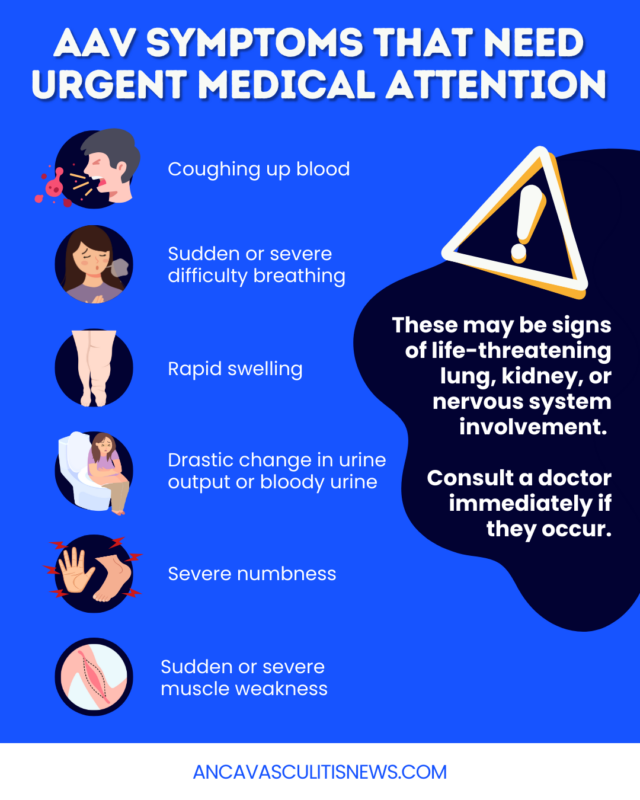
- coughing or coughing up blood
- shortness of breath
- chest pain
- wheezing
In some cases, AAV may be linked to serious lung problems such as interstitial lung disease, which can lead to life-threatening respiratory failure.
Kidney-related symptoms
Kidney damage is common in AAV. It affects most people with MPA and many with GPA, but it is less common in EGPA.
In AAV, inflammation can damage the kidney’s filtering units, making it harder to remove waste from the blood. This can lead to glomerulonephritis, a type of kidney disease. It may cause no symptoms at first, but possible signs include:
- bloody (red or tea-colored) or foamy urine
- high blood pressure
- urinating less than normal
- nausea, vomiting, or poor appetite
- swelling
Kidney symptoms in AAV can be an important clue about AAV prognosis. Without treatment, kidney damage may worsen quickly and lead to end-stage kidney disease, when the kidneys can’t work well enough and dialysis or a kidney transplant may be needed.
Skin symptoms
Across disease types, AAV skin symptoms are often nonspecific and may include:
- purple, brown, or reddish patches (purpura)
- bluish-purple mottling, or net-like pattern, often on the legs
- thin streaks of blood under fingernails (splinter hemorrhage)
- sores, raised bumps, or hives
Nervous system symptoms
AAV nerve damage can affect the brain and spinal cord (the central nervous system) or the nerves outside the brain and spine (the peripheral nervous system). Peripheral nerve symptoms may affect up to 65% of patients, while central nervous system involvement is less common.
Symptoms can occur when nerves are directly damaged by inflammation, or when swelling in nearby tissues puts pressure on a nerve.
Peripheral nerve symptoms can include:
- tingling, numbness, or “pins and needles” sensations
- muscle weakness
- loss of reflexes
Central nervous system symptoms can include:
- stroke
- cognitive or mood changes
- sensory or motor changes
- headaches
Eye symptoms
Eye inflammation is most common in GPA, but it can also occur in other disease types. Eye symptoms of AAV may include:
- redness and irritation
- eye pain
- swelling
- bulging or protruding eyeballs
- blurred vision
- vision loss
- light sensitivity
Digestive and abdominal symptoms
Digestive and abdominal symptoms are most often seen in EGPA, but they can occur with any disease type. These problems can mimic other conditions and may range from mild to life-threatening.
Symptoms can include:
- blood in stool
- abdominal pain
- indigestion
- nausea or vomiting
- diarrhea
- bloating
When to see a doctor
It can be hard to know when to see a doctor for AAV symptoms, but early diagnosis and treatment are important to help prevent irreversible AAV progression.
If someone has possible warning signs of AAV, they should contact a healthcare provider, who can help decide whether testing is needed. Anyone with severe or potentially life-threatening symptoms should seek medical care right away.
People already diagnosed with AAV should talk to their healthcare team if they develop new symptoms or if existing symptoms get worse, since that may signal an AAV symptom flare.
ANCA Vasculitis News is strictly a news and information website about the disease. It does not provide medical advice, diagnosis, or treatment. This content is not intended to be a substitute for professional medical advice, diagnosis, or treatment. Always seek the advice of your physician or other qualified health provider with any questions you may have regarding a medical condition. Never disregard professional medical advice or delay in seeking it because of something you have read on this website.